Roseville :(916) 630-7633


Tooth pain has a way of showing up at the worst possible moment — mid-meal, mid-meeting, or right as you’re falling asleep. Most people brush it off as “just sensitivity,” but persistent discomfort is often your tooth’s way of telling you something more serious is happening beneath the surface. Recognizing root canal symptoms early can mean the difference between saving your natural tooth and losing it altogether. If you live in the Sacramento area and you’re dealing with tooth pain that won’t quit, root canal therapy may be the solution your dentist recommends — and knowing the warning signs now can help you act before the problem escalates.
Quick answer: The most common root canal symptoms include lingering tooth pain (especially with hot or cold), swelling or tenderness in the gums, a darkening tooth, and pain when chewing or applying pressure. These signs typically mean the tooth’s inner pulp is infected or inflamed and needs professional evaluation right away.
Why Root Canal Symptoms Develop
Every tooth has a soft inner layer called the pulp, made up of nerves, blood vessels, and connective tissue. When decay, a crack, or trauma allows bacteria to reach this pulp, it becomes inflamed or infected. Because the pulp is enclosed within hard tooth structure, there’s nowhere for the swelling or pressure to go — which is exactly why the pain from an infected tooth can feel so intense and persistent compared to ordinary sensitivity.
Left untreated, this infection doesn’t resolve on its own. It can spread to the surrounding bone, form an abscess, and in some cases lead to systemic health complications. Endodontic research consistently shows that root canal therapy has a success rate above 90%, making it one of the most reliable ways to eliminate infection while keeping your natural tooth intact rather than moving straight to extraction.
Common Signs You Might Need a Root Canal
1. Persistent or Throbbing Tooth Pain Occasional sensitivity that fades quickly is usually not a concern. But pain that lingers for more than a few seconds after eating something hot or cold, or that throbs on its own without any trigger, often points to pulp damage that requires treatment.
2. Sensitivity to Hot and Cold That Doesn’t Go Away A brief zing from ice water is common and often harmless. However, if a hot cup of coffee or a cold drink leaves your tooth aching for minutes afterward, the nerve inside may be dying or already infected.
3. Swelling or Tenderness in the Gums Swollen, tender, or bubble-like gum tissue near a specific tooth can indicate that infection has spread beyond the tooth itself. This swelling sometimes comes and goes, which can mislead people into thinking the problem has resolved when it hasn’t.
4. Pain When Chewing or Applying Pressure If biting down or even light pressure on a tooth causes a sharp or dull ache, the ligaments surrounding the root may be reacting to infection or inflammation deep inside the tooth.
5. A Tooth That’s Darkening or Discoloring A tooth that gradually turns gray, yellow, or dark brown compared to its neighbors often signals that the internal pulp has died. This discoloration typically won’t reverse without treatment.
6. A Recurring or Persistent Pimple on the Gums A small, recurring bump on the gum — sometimes draining fluid — is a classic sign of a dental abscess and usually means bacteria have reached the root tip.
7. Cracked or Chipped Tooth With Ongoing Pain Trauma to a tooth can expose the pulp to bacteria even without visible decay. If a chipped or cracked tooth continues to hurt weeks later, it likely needs endodontic evaluation.
It’s worth noting that not every case comes with obvious pain. Some infections progress quietly, especially if the nerve has already died, which is why routine dental exams and X-rays remain an important safety net even when you feel fine.
What Happens If You Ignore These Symptoms
Putting off treatment rarely makes the problem go away. Instead, the infection tends to progress, sometimes resulting in a painful abscess, bone loss around the root, or the need for extraction rather than a simple, tooth-saving procedure. Catching root canal symptoms early generally means a more straightforward treatment, a faster recovery, and a better long-term outcome for the tooth. Whether you’re closer to our Roseville office or our Yuba City location, prompt evaluation gives your dentist the best chance of preserving your natural smile with minimally invasive care. Patients from Rocklin, Granite Bay, and Lincoln are welcome at our Roseville location, while those near Marysville, Live Oak, and Sutter can conveniently visit us in Yuba City — and no matter which office is closer to home, you’re welcome to schedule at either one.
What to Expect During Treatment
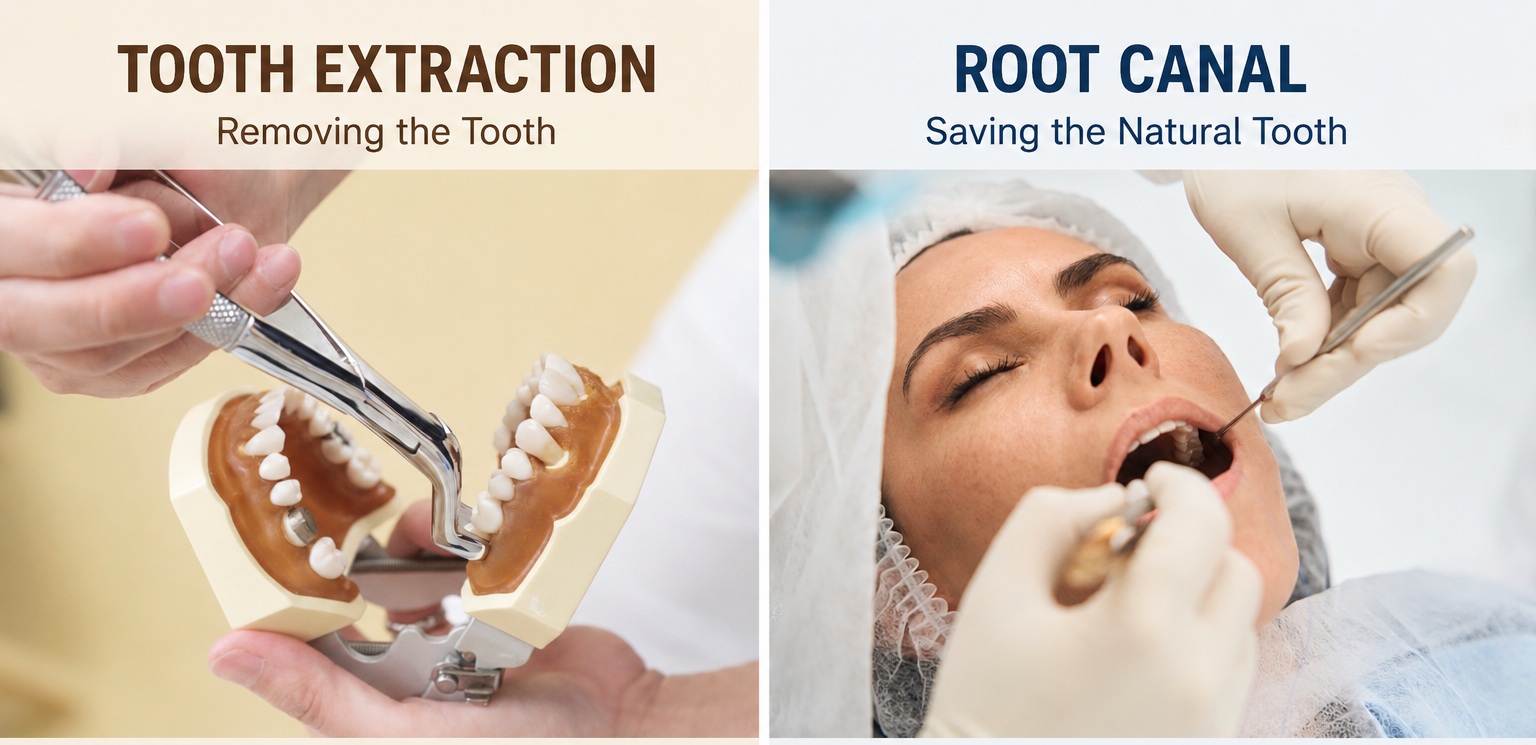
Modern root canal therapy is far more comfortable than its reputation suggests. The procedure involves numbing the area, removing the infected or damaged pulp, thoroughly cleaning and shaping the canal, and sealing it to prevent reinfection. Most patients describe the experience as comparable to getting a routine filling, and many report immediate relief from the pressure and pain that brought them in. Depending on the tooth’s condition, a crown may be recommended afterward to restore strength and protect the tooth for years to come. Learning more about the step-by-step root canal process can also help ease any anxiety before your visit.
Preventive Tips to Reduce Your Risk
- Keep up with regular checkups and cleanings so decay is caught before it reaches the pulp.
- Address cracked or chipped teeth promptly, even if they aren’t painful yet.
- Wear a nightguard if you grind your teeth, since chronic stress fractures can expose the nerve over time.
- Don’t ignore mild, recurring sensitivity — early evaluation is far less invasive than waiting for an abscess to form.
FAQ
Q: How do I know if my tooth pain is a cavity or something that needs a root canal?
A: Cavity-related sensitivity is usually brief and tied to a specific trigger like sugar or cold air. Pain that lingers, throbs, or wakes you up at night is more consistent with pulp infection and warrants a dental exam.
Q: Can a root canal be needed without any pain at all?
A: Yes. Once the nerve inside a tooth dies, pain can actually subside even though infection is still present, which is why darkening, gum swelling, or a routine X-ray sometimes reveal the issue first.
Q: Is root canal therapy painful?
A: With modern local anesthesia and techniques, most patients feel little to no discomfort during the procedure itself and describe it as similar to having a cavity filled.
Q: How long does recovery take after a root canal?
A: Most patients return to normal activities within a day or two, with mild tenderness that typically resolves within a week.
Q: What happens if I wait too long to treat these symptoms?
A: Delaying treatment can allow the infection to spread to the bone, increase the risk of an abscess, and may ultimately require extraction instead of a tooth-saving procedure.
Q: Do I need a crown after a root canal?
A: Many patients, especially those treated on molars, benefit from a crown afterward to restore full chewing strength and protect the tooth from future fracture.